Match Valve Response to the System
A practical guide to characteristic control valve selection, application and integration for efficient hydronic systems.
A characteristic control valve is selected for the relationship between valve travel and flow capacity. Linear, equal-percentage and modified characteristics behave differently once installed in a real hydronic circuit, so the correct choice is essential for stable control.
Engineers searching for characteristic control valve solutions usually need more than a product label. They need to know what the device controls, which values it measures, how it communicates and whether its hydraulic performance matches the design conditions. Related terms include equal percentage control valve, linear characteristic valve; the exact feature set should always be confirmed from the project specification.
A characteristic control valve is selected for the relationship between valve travel and flow capacity. Linear, equal-percentage and modified characteristics behave differently once installed in a real hydronic circuit, so the correct choice is essential for stable control. In a well-designed system, the valve is sized around the required flow and available differential pressure, not simply matched to pipe diameter. Its sensors, actuator and controller must also suit the required sequence of operation.
Typical applications include heating and cooling coils, heat exchangers, mixing circuits, process cooling and variable-flow branches. The valve may regulate a single coil, stabilize a distribution branch, transfer data to a BMS or help operators verify that actual performance matches the design intent.
Coordinate valve sizing, control points and network requirements during design so commissioning is predictable.
Use measured operating data to identify overflow, unstable control or insufficient differential pressure.
The principal benefits are stable modulation, usable valve authority and reduced hunting. These advantages depend on correct sizing, installation and commissioning. A connected or sensor-equipped valve cannot compensate for unsuitable valve capacity, poor sensor placement or an incomplete control sequence.
| Design Question | What to Confirm |
|---|---|
| Hydraulic duty | Design flow, minimum flow, available differential pressure and allowable pressure drop. |
| Control duty | Modulating or on/off service, controlled variable, fail position and feedback. |
| Integration | Power supply, analog signals, communication protocol and available data points. |
| Mechanical fit | Pipe connection, pressure class, temperature, fluid compatibility and service access. |
TALOAR offers control and balancing valve families that can be evaluated for the hydraulic and automation duties described above. Final suitability depends on the selected model and complete operating conditions.
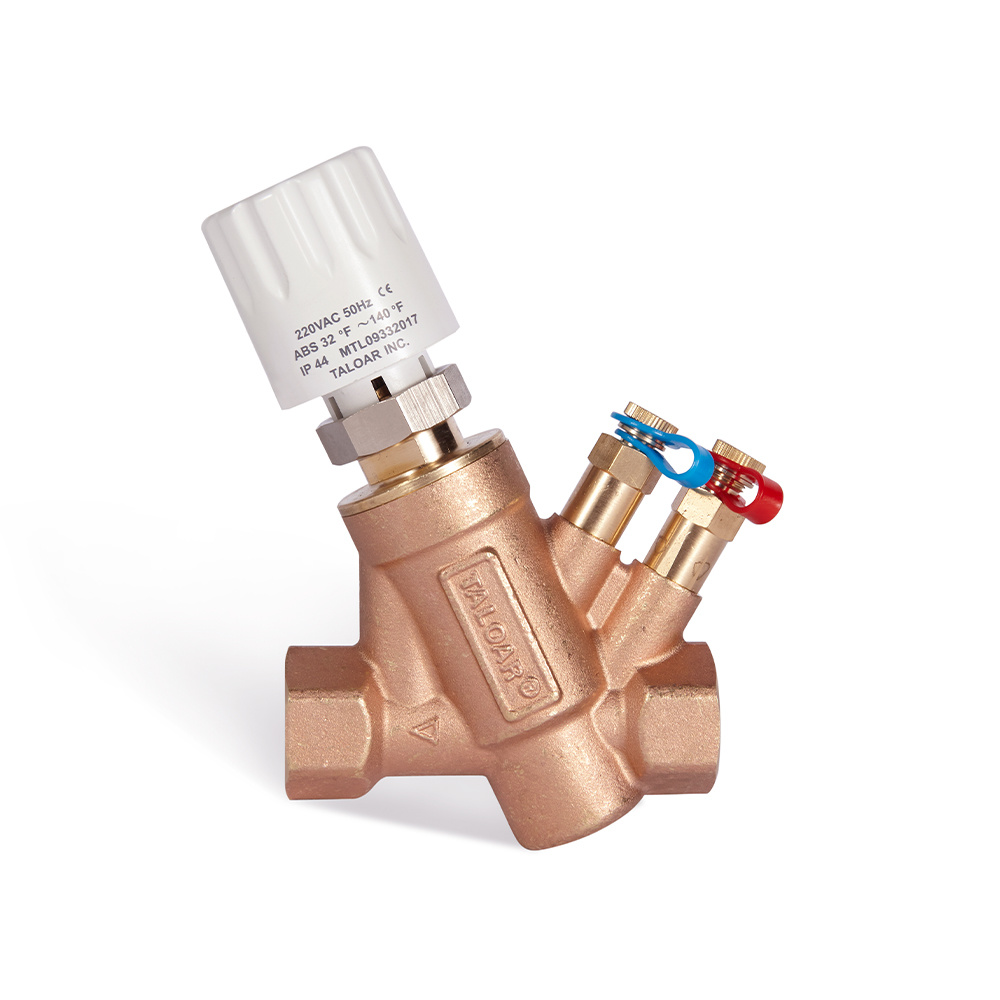
Combine modulating control and automatic hydronic balancing for variable-flow branches.
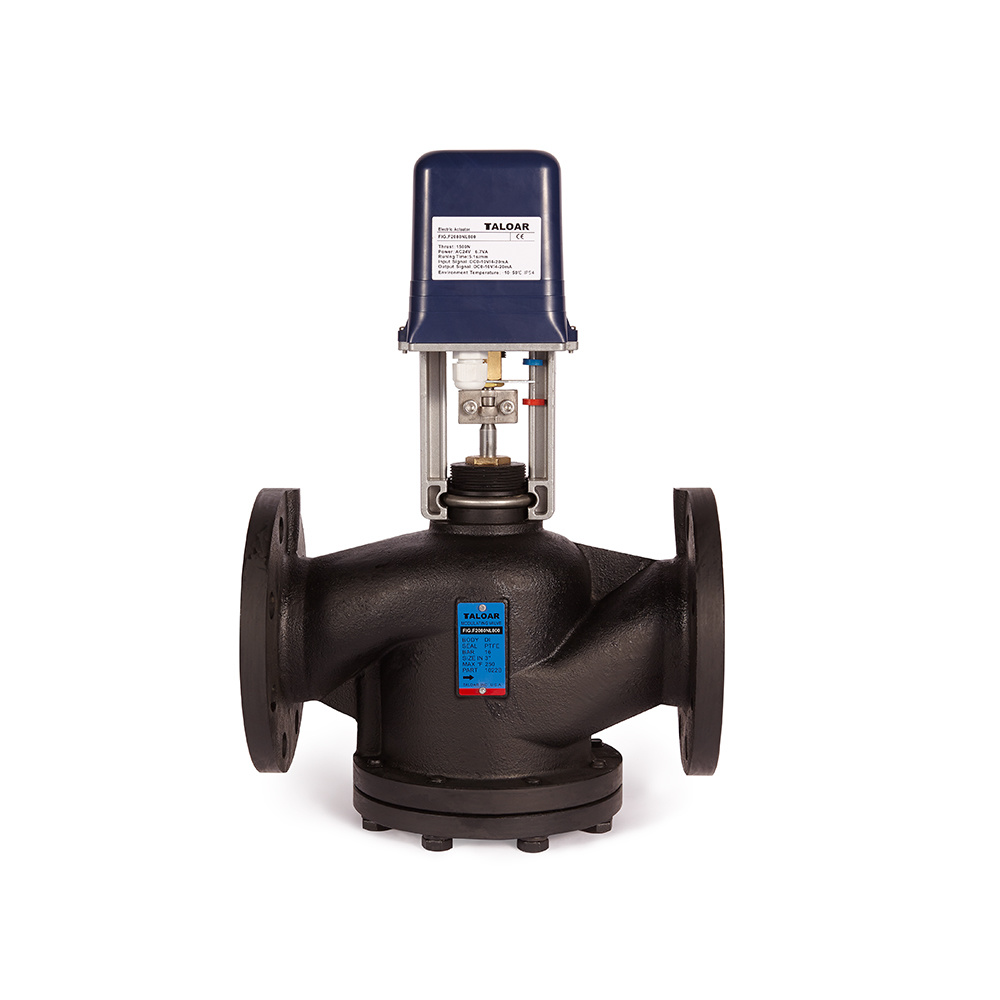
Provide dependable modulating or on-off operation for heating and cooling water systems.
Start by confirming inherent characteristic, installed characteristic, valve authority, required rangeability, pressure drop and actuator resolution. Review maximum and minimum operating conditions rather than one nominal duty point. For modulating applications, check valve authority and usable rangeability. For connected devices, document the required points list, addressing method and behavior if communication is interrupted.
Commissioning should verify installation direction, design flow, actuator stroke, sensor readings and the complete control sequence. Trend data is most useful when it is compared with supply temperature, return temperature, pump operation and load. TALOAR technical support can review valve selection against your schedule and operating data.
Not always. A standard motorized valve primarily changes position. An intelligent, digital or measured solution may also regulate a defined variable, store settings and provide operating data. Confirm the actual functions offered by the selected model.
It can support energy-efficient operation by preventing overflow, improving control and exposing performance data. Savings depend on the system design, control sequence, pump strategy and ongoing operation.
Provide fluid type, design and minimum flow, temperatures, pressure, available differential pressure, pipe connection, control requirement, power supply and communication needs.
Verify mechanical installation, wiring, sensor values, flow setting, actuator response, network mapping and fail-safe behavior under real operating conditions.
Send TALOAR your flow, pressure, temperature and control requirements for technical review.

Copyright © TALOAR All Rights Reserved